English Tuition for Australia and New Zealand
XQUISITE TUTORIALS
Aboriginal Voices
COMPLETE TRANSCRIPT
“Thank you so much for coming along this evening and I would also like to extend my respects to my Gadigal brothers and sisters from my people, the Wiradjuri people.
In the winter of 2015, Australia turned to face itself. It looked into its soul and it had to ask this question. Who are we? What sort of country do we want to be? And this happened in a place that is most holy, most sacred to Australians. It happened in the sporting field, it happened on the football field. Suddenly the front page was on the back page, it was in the grandstands.
Thousands of voices rose to hound an Indigenous man. A man who was told he wasn’t Australian. A man who was told he wasn’t Australian of the Year. And they hounded that man into submission.
I can’t speak for what lay in the hearts of the people who booed Adam Goodes. But I can tell you what we heard when we heard those boos. We heard a sound that was very familiar to us.
We heard a howl. We heard a howl of humiliation that echoes across two centuries of dispossession, injustice, suffering and survival. We heard the howl of the Australian dream and it said to us again, you’re not welcome.
The Australian Dream.
We sing of it, and we recite it in verse. Australians all, let us rejoice for we are young and free.
My people die young in this country. We die ten years younger than average Australians and we are far from free. We are fewer than three percent of the Australian population and yet we are 25 percent, a quarter of those Australians locked up in our prisons and if you are a juvenile, it is worse, it is 50 percent. An Indigenous child is more likely to be locked up in prison than they are to finish high school.
I love a sunburned country, a land of sweeping plains, of rugged mountain ranges.
It reminds me that my people were killed on those plains. We were shot on those plains, disease ravaged us on those plains.
I come from those plains. I come from a people west of the Blue Mountains, the Wiradjuri people, where in the 1820’s, the soldiers and settlers waged a war of extermination against my people. Yes, a war of extermination! That was the language used at the time. Go to the Sydney Gazette and look it up and read about it. Martial law was declared and my people could be shot on sight. Those rugged mountain ranges, my people, women and children were herded over those ranges to their deaths.
The Australian Dream.
The Australian Dream is rooted in racism. It is the very foundation of the dream. It is there at the birth of the nation. It is there in terra nullius. An empty land. A land for the taking. Sixty thousand years of occupation. A people who made the first seafaring journey in the history of mankind. A people of law, a people of lore, a people of music and art and dance and politics. None of it mattered because our rights were extinguished because we were not here according to British law.
And when British people looked at us, they saw something sub-human, and if we were human at all, we occupied the lowest rung on civilisation’s ladder. We were fly-blown, stone age savages and that was the language that was used. Charles Dickens, the great writer of the age, when referring to the noble savage of which we were counted among, said “it would be better that they be wiped off the face of the earth.” Captain Arthur Phillip, a man of enlightenment, a man who was instructed to make peace with the so-called natives in a matter of years, was sending out raiding parties with the instruction, “Bring back the severed heads of the black troublemakers.”
They were smoothing the dying pillow.
My people were rounded up and put on missions from where if you escaped, you were hunted down, you were roped and tied and dragged back, and it happened here. It happened on the mission

Stan Grant: racism and the Australian dream
What is Stan Grant's perspective on the Australian Dream? What reasons does he provide for his views? What language devices are employed to convey his notions?
that my grandmother and my great grandmother are from, the Warrengesda on the Darling Point of the Murrumbidgee River.
Read about it. It happened.
By 1901 when we became a nation, when we federated the colonies, we were nowhere. We’re not in the Constitution, save for ‘race provisions’ which allowed for laws to be made that would take our children, that would invade our privacy, that would tell us who we could marry and tell us where we could live.
The Australian Dream.
By 1963, the year of my birth, the dispossession was continuing. Police came at gunpoint under cover of darkness to Mapoon, an aboriginal community in Queensland, and they ordered people from their homes and they burned those homes to the ground and they gave the land to a bauxite mining company. And today those people remember that as the ‘Night of the Burning’.
In 1963 when I was born, I was counted among the flora and fauna, not among the citizens of this country.
Now, you will hear things tonight. You will hear people say, “But you’ve done well.” Yes, I have and I’m proud of it and why have I done well? I’ve done well because of who has come before me. My father who lost the tips of three fingers working in saw mills to put food on our table because he was denied an education. My grandfather who served to fight wars for this country when he was not yet a citizen and came back to a segregated land where he couldn’t even share a drink with his digger mates in the pub because he was black.
My great grandfather, who was jailed for speaking his language to his grandson (my father). Jailed for it! My grandfather on my mother’s side who married a white woman who reached out to Australia, lived on the fringes of town until the police came, put a gun to his head, bulldozed his tin humpy and ran over the graves of the three children he buried there.
That’s the Australian Dream. I have succeeded in spite of the Australian Dream, not because of it, and I’ve succeeded because of those people.
You might hear tonight, “But you have white blood in you”. And if the white blood in me was here tonight, my grandmother, she would tell you of how she was turned away from a hospital giving birth to her first child because she was giving birth to the child of a black person.
The Australian Dream.
We’re better than this. I have seen the worst of the world as a reporter. I spent a decade in war zones from Iraq to Afghanistan, and Pakistan. We are an extraordinary country. We are in so many respects the envy of the world. If I was sitting here where my friends are tonight, I would be arguing passionately for this country. But I stand here with my ancestors, and the view looks very different from where I stand.
The Australian Dream.
We have our heroes. Albert Namatjira painted the soul of this nation. Vincent Lingiari put his hand out for Gough Whitlam to pour the sand of his country through his fingers and say, “This is my country.” Cathy Freeman lit the torch of the Olympic Games. But every time we are lured into the light, we are mugged by the darkness of this country’s history. Of course racism is killing the Australian Dream. It is self-evident that it’s killing the Australian dream. But we are better than that.
The people who stood up and supported Adam Goodes and said, “No more,” they are better than that. The people who marched across the bridge for reconciliation, they are better than that. The people who supported Kevin Rudd when he said sorry to the Stolen Generations, they are better than that. My children and their non-Indigenous friends are better than that. My wife who is not Indigenous is better than that.
And one day, I want to stand here and be able to say as proudly and sing as loudly as anyone else in this room, Australians all, let us rejoice.
Thank you.”

Dark Unmarried Mothers
by Oodgeroo Noonuccal
All about the country,
From earliest teens,
Dark unmarried mothers,
Fair game for lechers –
Bosses and station hands,
And in town and city
Low-grade animals
Prowl for safe prey.
Nothing done about it,
No one to protect them –
But hush, you mustn’t say so,
Bad taste or something
To challenge the accepted,
Disturbing the established.
Turn the blind eye,
Wash the hands like Pilate.
Consent? Even with consent
It is still seduction.
Is it a white girl?
Then court case and headline
Stern talk of maintenance.
Is it a dark girl?
Then safe immunity;
He takes what he wants
And walks off like a dog.
Was ever even one,
One of all the thousands
Ever made responsible?
For dark unmarried mothers
The law does not run.
No blame for the guilty
But blame uttered only
For anyone made angry
Who dares even mention it,
Challenging old usage,
Established, accepted,
And therefore condoned.
Shrug away the problem,
The shame, the injustice;
Turn the blind eye,
Wash the hands like Pilate.
Write one paragraph to address the following question:
"Explore Noonuccal's portrayal of relationship power imbalances, and their consequences, in the poem "Dark Unmarried Mothers"?
Your paragraph should be approximately 400 words, and use two to three pieces of evidence.
Dark Unmarried Mothers by Oodgeroo Noonuccal highlights the power imbalances in a relationship between a white man and an Aborignal women.


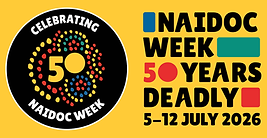
Naidoc 2022 Poster
What visual techniques are incorporated in the poster? What is the significance of the colour in the poster?
What verbal techniques are used? What is the message portrayed?

Common Wealth by Gregg Dreise
What ideas are evoked through the visual techniques?
What verbal techniques are employed?
What is the overall message presented?


1. Briefly outline what you think this poem is about.
2. How does the title refer to the extended metaphor of the ‘Frankenstein’ motif? What connotations do you associate with a ‘monster’?
3. How does the title’s reference enrich and extend your understanding of the content of the poem? How is the intertextual reference to Mary Shelley’s Frankenstein used to further challenge the reader’s understanding of the ultimate meaning of the poem?
4. Is there only one way to read this poem? Justify your answer.
5. Is Wagan Watson experiencing freedom, or oppression? How do you know?
6. Is it possible to experience freedom and oppression concurrently?
7. Compose a SEEAC paragraph in response to the following question:
Freedom cannot exist without oppression. Explore this concept in relation to Samuel Wagan Watson’s poem ‘Monster.’


What is the view of urban Australia presented in the text? Explain.
What are the themes that Watson explores?
What are some of the elements commonly found in his work?

Sister Heart by Sally Morgan

Learn about the importance of a yarning circle for First Nation people.
1. Annie is taken from the north-west of Western Australia to the south. Answer the following questions, using the map of Aboriginal Australia to help: http://aiatsis.gov.au/explore/articles/aboriginal-australia-map
a. What are the names of some of the Aboriginal nations in the north-west of Western Australia?
b. The author, Sally Morgan, comes from the Palyku people. Can you find the Palyku people on the map? (Hint: look next to the red line that divides the ‘northwest’ from the ‘desert’ region.)
2. The south-west, where Annie is taken to, are the lands of the Noongar people. Visit http://www.noongarculture.org.au and navigate to the map to answer the following: a. Noongar country is divided into different regions. How many are there?
3. Aboriginal people sometimes perform a Welcome to Country ceremony, and non-Aboriginal people acknowledge the Traditional Owners of an area.
a. Can you find out who the Traditional Owners of the area where your school is located are?
b. What is a Welcome to Country ceremony and why is it important?
c. For information on Welcome to Country ceremonies, refer to the Reconciliation Australia factsheet Welcome to Country & Acknowledgement of Country, downloadable at: https://www.reconciliation.org.au/resources)
4. Before Annie was taken away by the government she often looked for bush food with her family. Later,
the environment around the institution she is taken to is important to her and to Janey and Tim. How do
the following help Annie, Janey and Tim to survive and be strong?
• The bush food (pp. 62, 153, 186, 204)
• The laughing stone (pp. 105–106, 123, 214)
The gilgies (p.180 Section 3)
• The billy buttons (pp. 184, 245–246)
• The crying tree (pp. 106, 113–114, 149, 229–231, 245)
• The stick doll (pp. 110–112, 238)
• The kookaburra (pp. 107, 249–251)
5. Aboriginal kinship structures link extended Aboriginal families together in a network of relationships and responsibilities. When Sister Heart begins Annie has already been taken away from her family but she thinks about them throughout the book.
a. Who is in Annie’s family? Who has Annie added to her family by the end of the book (pp. 240–241)?
b. On p. 99, Janey says to Annie: You cryin’ for your mummy and daddy? / Your brothers and sisters? / Your aunties and uncles? / Your cousins? / Your grannies?
On p. 113, Annie thinks: At home I share / with my cousin brothers / and cousin sisters / and they share with me.
What does this tell us about Aboriginal families? How is this like your own family? How is it different?
6. Sister Heart is about a period in Australian history when Aboriginal people were discriminated against. Now Australia has weeks in the year when we celebrate Aboriginal cultures and histories. Plan something your school could do for National Reconciliation Week or NAIDOC week. For further information about National Reconciliation Week, NAIDOC week, and Reconciliation Action Plans see:
• http://www.reconciliation.org.au/nrw
• http://www.reconciliation.org.au/schools/raps
Discussion Questions
1. Annie is part of the ‘Stolen Generations’. Who are the Stolen Generations?
2. During the Stolen Generations era the names of many children were changed. What effect did this have on Annie and Janey (e.g. pp. 119–121)?
3. In 2008 Prime Minister Rudd apologised to the Stolen Generations. (The text of the Apology:
a. Why does it matter to say sorry?
b. How do you think Annie would have reacted if she had heard the Apology?
c. What is National Sorry Day? Refer to: www.nsdc.org.au.
Storytelling
4. Annie is very scared when she comes to the institution, but then she meets Janey (pp. 59–60). Write a story about how you first met one of your friends.
5. Sister Heart is a verse novel, which is a mix of poetry and prose. Do you think it is easier or harder to write in verse? Write a short story in verse.
6. Make a map of the institution. On the map detail * the school *the dormitory *the hospital and *the crying tree.
7. Draw a picture of the institution, and discuss as a class the different ways students have depicted the institution and why they imagined it in that way.
8. Sister Heart never tells you how old Annie is, or how old any of her friends are. How old do you think Annie, Janey and Tim are? What is it about the book that makes you think that’s their age? Why do you think the author didn’t put their ages in the book?
9. Tim gives Annie the laughing stone to cheer her up when she is sad (pp. 105–106). Why does it matter to have something to cheer you up? Write a story or draw a picture of something that makes you feel better when you are sad.


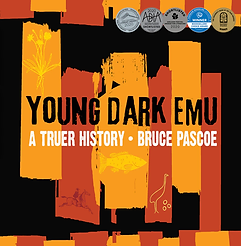
Young Dark Emu by Bruce Pascoe
-
Was there anything in the clip that resonated with you?
-
What questions about the text do you still have?
Everyday Life of the Darug People
In the Virtual Dreaming simulation we show everyday life of Aboriginal people from the Darug tribe, who used to live in the Parramatta basin (New South Wales, Australia) before the arrival of the first fleet and the establishment of the first European settlement in Australia. Our simulation features the Parramatta Campus of the Western Sydney University in year 1788 reconstructed from GIS data. The virtual environment shown in the video was populated with plants and animals under supervision of Darug elders. The voices in the simulation and movements of virtual agents are true recordings of voices and motions of the Darug elders. The storyline was designed by the elders as well.
Unpacking concepts: writing task
Present the following concept writing task options to students. For this activity students choose ONE option to complete. Written reflections are to be between 150–250 words and should use personal and reflective language. Young Dark Emu deals with these concepts and having students pre-exposed to them and considering them before engaging with the text will be very beneficial in their overall understanding.
Option 1: truth
Why is it important to tell the truth? What can happen if we are not truthful about something that has happened? Who generally gets hurt when we are not honest? What happens if we try and bend the truth or hide the truth from others? Give an example of when you needed to tell the truth but found it really hard. Were you tempted to do something else instead, or not tell the truth altogether?
Option 2: evidence
What role does evidence play in convincing someone that something has happened? What are the different types of evidence you could use to present an idea? Is one type of evidence more valued than another? Give an example of when you needed evidence to help prove something. What did you do and how did you do it?
Option 3: knowledge
What is knowledge and how do we know if we are right? How do you arrive at an understanding of something? Give an example of when you thought you knew something about a topic, but it turned out you misjudged the situation and really there was a lot more to learn.
Option 4: tradition
What is a tradition? Why is it important to keep traditions happening? What can we learn from traditions? What value and worth do they hold for us today? Give an example of a tradition that you have in your family or community. What makes it so special?
Option 5: culture
What is culture? What is Australian culture? What is Australian Indigenous culture? What happened to cultures as a result of colonisation? What happened in Australia? Whose interpretation of this do we learn about at school? How can students learn a truer history?
Unpacking concepts: writing task
Podcast conversations
Present students with the following four situations. Invite students to select one and then script and record a one-to-two minute conversation that thoughtfully answers the chosen question. This task could be done in a podcast style and the class could listen and reflect on each others’ work.
Scenario 1: You are at the family dinner table and your parent or caregiver says to you, ‘So what’s the big deal about Young Dark Emu anyway?’
Scenario 2: You hear some other students in a different year group talking about First Nations people and culture. One student comes up to you and asks, ‘So Aboriginal people weren’t just hunters and gatherers?’
Scenario 3: You have just come out of class and your friend turns to you and asks, ‘So what did you think of Young Dark Emu?’
Scenario 4: You are discussing the current debate about Treaty or changing the Australian Constitution and you ask, ‘What was Terra Nullius and how was it justified by claiming that Indigenous Australians were primitive?’